
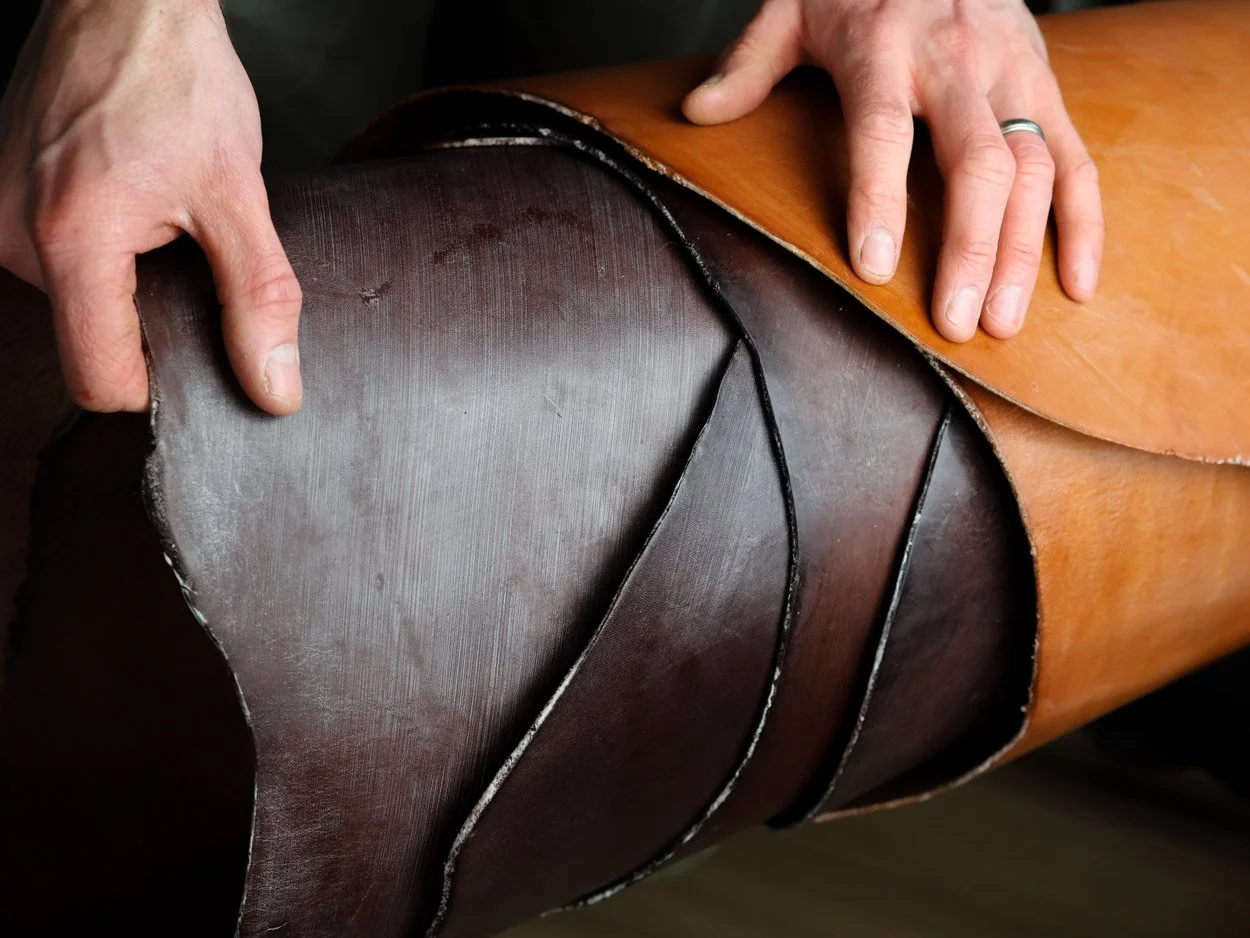
Our Leather
J & FJ Baker - the Last Oak Bark Tannery in the UK
All of our camera straps are now made from J & FJ Baker’s Oak Bark leather, produced by a small, family-run tannery based in Devon, UK. J & FJ Baker has been operating for over 150 years, spanning six generations of family ownership, and produces some of the finest leather in the world using traditional techniques and craftsmanship.
Each hide is tanned using Cumbrian oak bark (local to us) over a period of 12 months, then hand-finished with natural oils and greases. This results in a beautiful material that is incredibly strong, yet soft and supple. The entire process is free from chemicals and toxins, and the tannery employs a number of sustainable practices to minimise environmental impact.
The leather is supplied with an uncorrected grain, meaning the surface retains the animal’s natural markings, including scars and stretch marks acquired over its lifetime. The grass-fed cattle are sourced locally to the tannery, and each hide is a by-product of the meat industry—no animals are killed specifically for this leather. As a result, every hide, and therefore every camera strap, is unique, with subtle variations in texture and colour.
We believe that J & FJ Baker’s Oak Bark Shoulders represent the ultimate leather for camera straps: strong yet soft and supple, and naturally tanned for safe contact against the skin. Over time, your camera strap will develop a rich patina unique to you, as it absorbs oils from your skin and the environment around you.
Veg Tan Vs Chrome Tan
If you're looking for a high-quality leather product, you may be wondering whether to choose vegetable-tanned or chrome-tanned leather. While both types have their benefits, there are several reasons why vegetable-tanned leather is the superior choice. Firstly, vegetable-tanned leather is more environmentally friendly than chrome-tanned leather. The process of chrome tanning involves the use of toxic chemicals, which can be harmful to both the environment and the people involved in the tanning process. In contrast, vegetable tanning uses natural materials such as tree bark, which is a much more sustainable and eco-friendly option.